
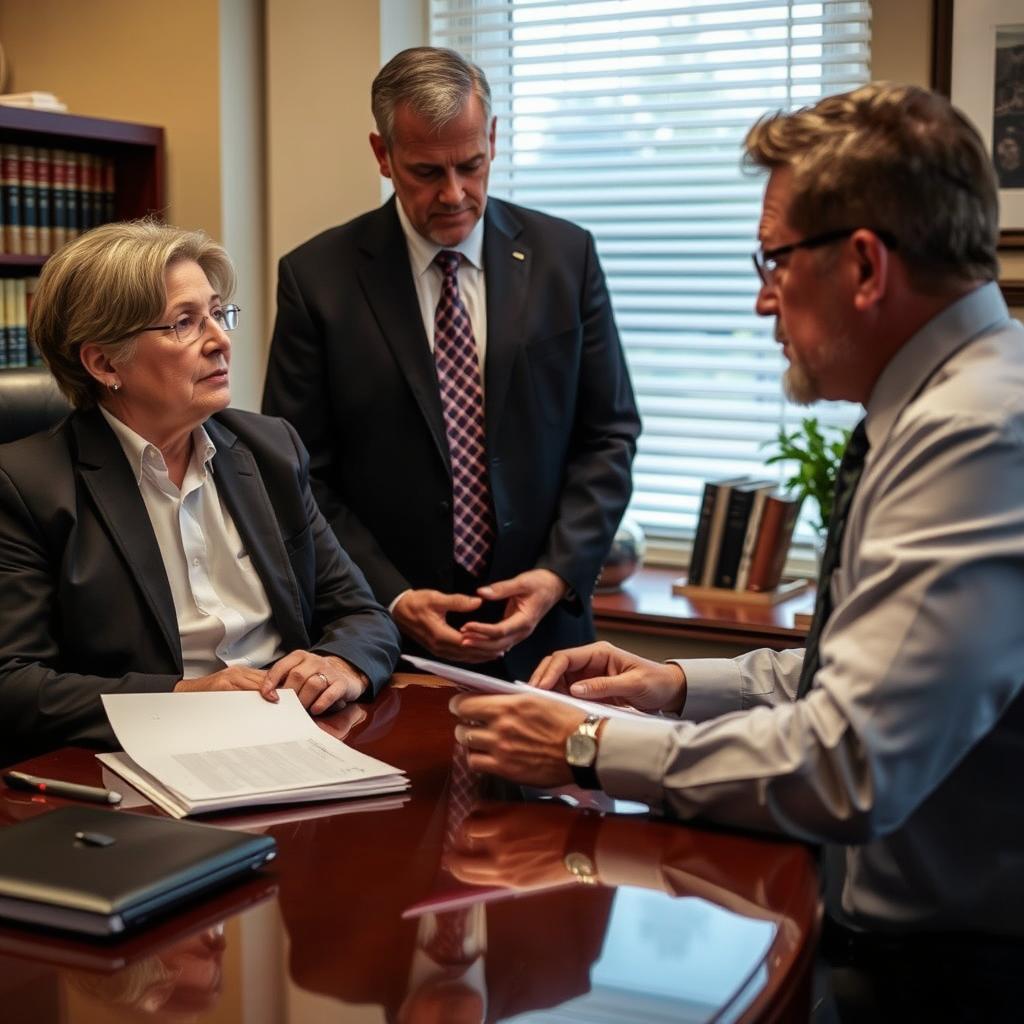
Repeat Traffic Offender Lawyer Talbot County
You need a Repeat Traffic Offender Lawyer Talbot County if you face a habitual offender designation in Maryland. This label follows multiple serious traffic convictions and leads to severe license revocation. Law Offices Of SRIS, P.C. —Advocacy Without Borders. defends against these charges by challenging the state’s evidence and procedural errors. Our Talbot County Location provides direct access to local court strategies. (Confirmed by SRIS, P.C.)
Statutory Definition of a Habitual Offender in Talbot County
Maryland Transportation Article §16-101 defines a habitual offender as a person convicted of specific major traffic offenses totaling a required number of points within a five-year period. The classification is administrative, not criminal, but the penalty is a mandatory license revocation for a minimum period, often years. The Motor Vehicle Administration (MVA) initiates this action separately from any court penalties for the underlying tickets.
The MVA tracks convictions using a point system. Certain convictions, like a DUI or reckless driving, carry high point values. Accumulating too many points from a series of violations triggers the habitual offender review. Once designated, your driving privilege is revoked. You cannot legally drive for the revocation period. Reinstatement is not automatic and requires a formal hearing.
Fighting this requires attacking the foundation of the designation. A Repeat Traffic Offender Lawyer Talbot County examines each cited conviction for errors. We check for improper service of citations or incorrect court records. We also challenge the MVA’s point calculations and the five-year look-back period. Successfully vacating even one underlying conviction can break the point total needed for the label.
What specific Maryland laws create a habitual offender status?
Maryland Transportation Article §§ 16-101 through 16-205 govern habitual offender determinations. The law mandates revocation after three major violations within five years. Major violations include driving under the influence (DUI), driving while revoked, and reckless driving. Each carries 8 to 12 points upon conviction. The MVA administratively adds points from court convictions to your record.
How does the Maryland point system work for drivers?
The Maryland point system assigns values from 1 to 12 points per traffic conviction. Speeding tickets might be 1-5 points depending on severity. A DUI conviction adds 12 points. Accumulating 8 points in two years triggers a warning letter. Earning 12 points leads to a mandatory suspension. The habitual offender designation uses a separate, stricter calculation focusing on major offenses.
What is the difference between a suspension and a revocation?
A suspension is a temporary withdrawal of your driving privilege for a set time. A revocation is a complete termination of your driving privilege. A habitual offender designation results in revocation. After a revocation period ends, you must apply for a new license. You must also attend a hearing and potentially pass all driver’s tests again. It is a more severe and permanent action.
The Insider Procedural Edge in Talbot County
Your case will be heard at the Talbot County District Court located at 119 N Washington St, Easton, MD 21601. This court handles all traffic matters, including those that contribute to a habitual offender review. Knowing the local clerk’s procedures for filing motions is critical for timing. Procedural specifics for Talbot County are reviewed during a Consultation by appointment at our Talbot County Location.
The process starts with you receiving an Order of Suspension or Revocation from the MVA. You have a strict deadline to request a hearing to contest this order. Missing this deadline waives your right to fight the revocation. The hearing is held before an Administrative Law Judge at an MVA Location, not the Talbot County District Court. However, the underlying convictions that triggered the action came from that court. Learn more about Virginia legal services.
Therefore, a dual-track defense is essential. We must challenge the MVA’s administrative action on one front. Simultaneously, we may need to file motions in Talbot County District Court to reopen or appeal the old cases that provided the points. This requires precise coordination between court systems. Filing fees for motions in District Court vary. We handle all filings and calendar critical dates.
Where exactly are traffic hearings held in Talbot County?
Initial traffic violation trials occur at the Talbot County District Court in Easton. The address is 119 N Washington St. Hearings to contest an MVA revocation order are held at an MVA hearing location. This is often in a different county, such as Glen Burnie. Your attorney must manage cases in both venues. This complexity highlights the need for a lawyer familiar with both systems.
What is the timeline to request a hearing after an MVA notice?
You typically have 15 days from the mailing date on the MVA notice to request a hearing. The notice will state the specific deadline. This timeline is absolute. The MVA will not accept a late request without extraordinary proof of mailing error. Acting immediately upon receiving any MVA correspondence is paramount. Contacting a lawyer the same day you get the notice protects your rights.
What are the typical court costs for filing a motion?
Filing a motion for modification or appeal in Talbot County District Court costs a standard fee. This fee is set by the Maryland Court system. Additional costs may include fees for obtaining trial transcripts from earlier cases. These transcripts are often necessary to prove an error occurred. SRIS, P.C. provides a clear cost breakdown during your initial case review. We explain all potential expenses upfront.
Penalties & Defense Strategies for Habitual Offenders
The most common penalty for a habitual offender designation is a license revocation for a minimum of one to five years, depending on your record. This is separate from any jail time or fines from the individual traffic convictions that led to the label. Driving during revocation leads to new criminal charges with mandatory minimum jail sentences.
| Offense | Penalty | Notes |
|---|---|---|
| Habitual Offender Designation | License Revocation (1-5 years min.) | Administrative penalty from MVA. |
| Driving While Revoked as Habitual Offender | Up to 1 year in jail, $1000 fine | Misdemeanor criminal charge in Talbot County. |
| Underlying DUI Conviction | Jail, fines, ignition interlock | Contributes 12 points to habitual offender tally. |
| Underlying Reckless Driving Conviction | Jail, fines, 6 points | Major violation in the point calculation. |
[Insider Insight] Talbot County prosecutors and the MVA take habitual offender cases seriously. They rely on court abstracts and driving records. A common weakness is faulty service of process on old tickets. If you were not properly served for a citation that led to a default conviction, we can attack it. Another trend is challenging the “five-year” look-back period if the MVA’s calculation is off by even one day.
Defense strategy requires a granular review of your entire Maryland driving record. We obtain certified copies of every case listed. We look for convictions where you may not have had a lawyer. We check for cases where the officer failed to appear, but a conviction was still entered. Each vulnerable conviction is a target for a motion to vacate. Removing one can drop your point total below the habitual offender threshold. Learn more about criminal defense representation.
What are the fines and jail time for driving while revoked?
Driving while your license is revoked as a habitual offender is a misdemeanor. Penalties include up to one year in jail and a $1,000 fine. For a second or subsequent offense, judges often impose active jail time. The charge also adds another major violation to your record. This extends your revocation period and creates a cycle that is hard to break without legal help.
How does a habitual offender label affect my car insurance?
Insurance companies will cancel your policy upon learning of a revocation. If you eventually get your license back, you will be placed in a high-risk pool. Premiums can triple or more. Some insurers may refuse to cover you at all. This financial impact lasts for years beyond the legal penalty. It is a severe long-term consequence of the designation.
Can I get a restricted license for work in Maryland?
Maryland does not grant restricted licenses for habitual offender revocations. The revocation is total. No driving for any purpose is permitted. This is a key difference from some suspension cases where work permits are possible. The law is intentionally harsh to keep designated habitual offenders off the road entirely. Your only legal option is to fight the designation itself.
Why Hire SRIS, P.C. for Your Talbot County Case
Our lead attorney for Talbot County traffic matters is a former law enforcement officer with direct insight into traffic stop procedures and MVA operations. This background provides a critical advantage in dissecting the state’s case against you. We know how officers document violations and how the MVA processes convictions.
SRIS, P.C. has a dedicated Talbot County Location for client meetings and case preparation. Our team has handled numerous habitual offender reviews in Maryland. We focus on the precise legal and factual errors that can reverse a designation. We do not just negotiate; we litigate the flaws in the MVA’s evidence chain. Our goal is to have the revocation order withdrawn entirely.
We assign a primary attorney and a paralegal to every case. You will have direct contact with the lawyer building your defense. We explain the strategy in clear terms. We prepare you for any required hearings. Our approach is aggressive and detail-oriented. We leave no stone unturned in reviewing your driving history and the state’s paperwork. For a DUI defense in Virginia or Maryland, the same rigorous standards apply.
Localized Talbot County Habitual Offender FAQs
How long does a habitual offender revocation last in Maryland?
The minimum revocation period is one year for a first designation. It can extend to five years or more for subsequent actions or serious underlying crimes. The clock starts from the date you surrender your license to the MVA. Learn more about DUI defense services.
Can I appeal a habitual offender designation in Talbot County?
Yes. You first request an MVA hearing to contest the order. If you lose, you can file for judicial review in Circuit Court. This appeal is based on legal errors made during the MVA hearing process. Deadlines are strict.
What happens if I get a ticket while my license is revoked?
You will be charged with driving while revoked, a misdemeanor. This new charge carries jail time and fines. It also resets the clock on your revocation period, making reinstatement much harder and farther in the future.
How can a lawyer help if the MVA already decided?
A lawyer files a motion to reopen the old traffic cases that supplied the points. If successful in vacating a conviction, we petition the MVA to recalculate your points. This can remove the habitual offender label post-decision.
Where is the SRIS, P.C. Location near Talbot County?
Our team serves Talbot County from a dedicated Maryland Location. We schedule in-person consultations by appointment to review your MVA documents and court records. We provide representation in Talbot County District Court and at MVA hearings.
Proximity, Contact, and Critical Disclaimer
Our legal team is positioned to serve clients throughout Talbot County, Maryland. We are accessible from Easton, St. Michaels, Oxford, and surrounding areas. For a case review with a Repeat Traffic Offender Lawyer Talbot County, contact our firm. Consultation by appointment. Call 24/7. We will discuss your MVA notice and the specific convictions at issue.
Law Offices Of SRIS, P.C.—Advocacy Without Borders. provides defense in Talbot County. We challenge the evidence and procedures used to label you a habitual offender. Do not delay after receiving an Order of Revocation. Immediate action is necessary to preserve your right to a hearing. Call now to begin building your defense.
Past results do not predict future outcomes.