
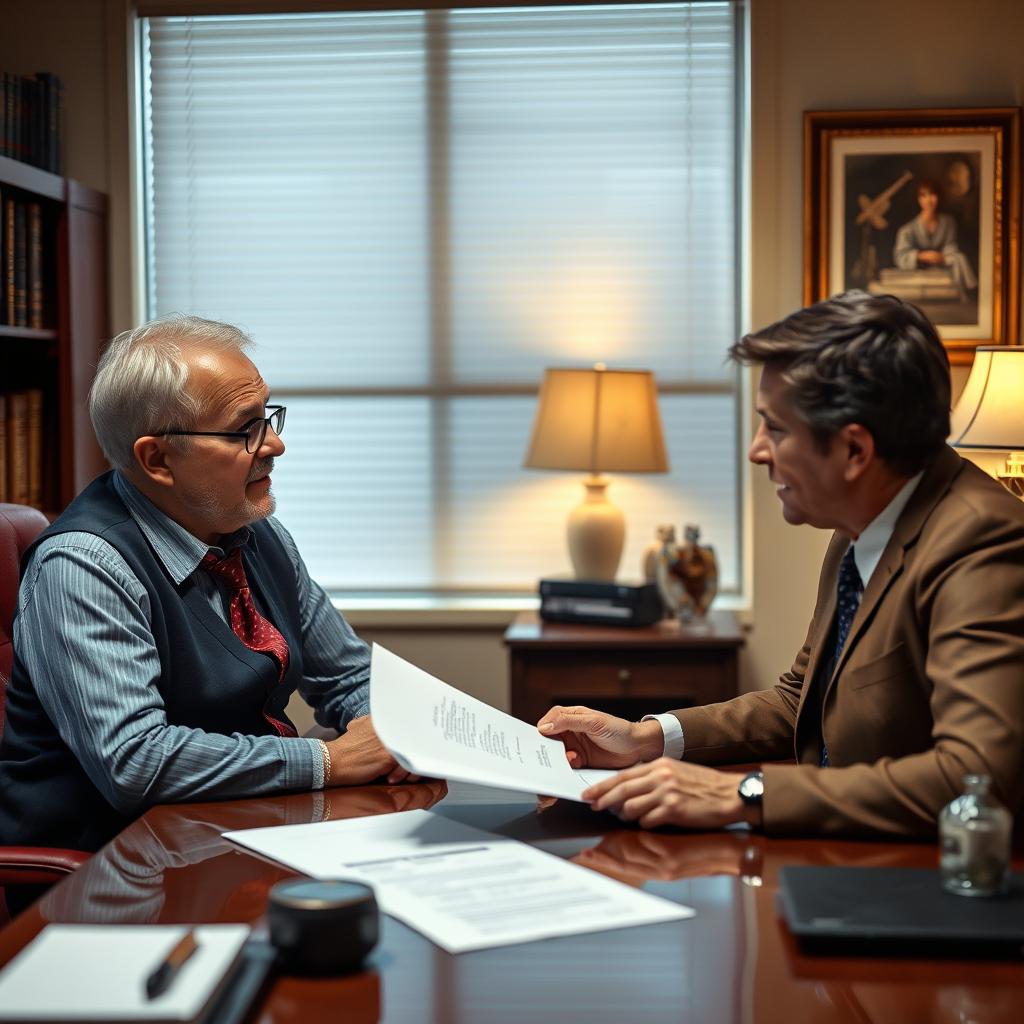
Can a DUI be dismissed in Clinton County
A DUI charge in Clinton County, New York, can be dismissed when the prosecution’s evidence is insufficient or when law enforcement violated your constitutional rights during the stop, arrest, or chemical testing. Dismissal is not routine, but experienced defense counsel can identify procedural errors, challenge the reliability of breath or blood test results, and expose weaknesses in the state’s case. A charge may also be dismissed if the officer lacked reasonable suspicion for the traffic stop or probable cause for the arrest, if the field sobriety tests were administered improperly, or if the chemical test was conducted outside statutory requirements. In some cases, the court may grant a motion to suppress evidence, effectively depriving the prosecution of the foundation it needs to proceed, which leads to a dismissal. Mr. Sris, Owner and Founder of Law Offices Of SRIS, P.C., has handled DUI matters across New York’s 4th Judicial District, including Clinton County, since 1997. He and his Of Counsel examine every aspect of the government’s case with the scrutiny of former prosecutors and law enforcement professionals who understand how cases are built. To discuss whether your Clinton County DUI charge can be dismissed, reach Law Offices Of SRIS, P.C. at (888) 437-7747. Law Offices Of SRIS, P.C. – Advocacy Without Borders.
What DUI Defense Means in Clinton County, New York
Clinton County sits in New York’s North Country, bordered by Lake Champlain and the Canadian province of Quebec. Law enforcement agencies in the county—including the Clinton County Sheriff’s Office, the New York State Police, and municipal departments in Plattsburgh, Peru, Chazy, and Dannemora—actively patrol the region’s highways, particularly Interstate 87 and Route 9. DUI arrests in this jurisdiction are prosecuted under New York Vehicle and Traffic Law § 1192, which defines several distinct offenses: driving while intoxicated (DWI) at a blood alcohol concentration of 0.08 percent or higher, aggravated DWI at 0.18 percent or higher, driving while ability impaired by alcohol (DWAI), and driving while ability impaired by a combination of drugs and alcohol. A first-offense DWI is a misdemeanor in New York; subsequent offenses within a ten-year lookback period may be prosecuted as felonies.
DUI cases arising in Clinton County are adjudicated in the local justice courts of the town or village where the stop occurred, or in the Clinton County Supreme Court, located at 137 Margaret Street, Plattsburgh. The local justice courts handle misdemeanor-level DWI and DWAI cases, while felony DWI charges and certain aggravated cases may proceed to the County Court level. The procedural landscape in these courts—from arraignment to pretrial motions to trial—favors defense counsel who are experienced in New York’s idiosyncratic DWI laws. For example, New York’s implied consent statute carries administrative license suspension consequences for a refusal to submit to a chemical test, but a refusal hearing offers a separate forum where the dismissal of the underlying refusal charge can strengthen the defense of the DUI criminal proceeding. Mr. Sris and his Of Counsel appear in Clinton County courts and apply a multi-jurisdiction perspective informed by practice in five states and the District of Columbia.
How Mr. Sris and His Of Counsel Handle DUI Cases
When someone contacts Law Offices Of SRIS, P.C. about a DUI charge in Clinton County, the first step is a thorough review of the arrest report, the supporting deposition, the calibration and maintenance records of any breath testing instrument, and any available video footage—whether from the officer’s body-worn camera, the patrol vehicle’s dash camera, or nearby surveillance. A DUI case often turns on technical details: whether the Alco-Sensor or DataMaster device was operated by a certified technician, whether the twenty-minute observation period was observed before a breath test, and whether the field sobriety tests—the horizontal gaze nystagmus, the walk-and-turn, the one-leg stand—were administered in substantial compliance with National Highway Traffic Safety Administration (NHTSA) standards. A deviation from protocol can provide grounds for a motion to suppress the evidence, and if that motion is granted, the prosecution may be left with no viable case to present, resulting in a dismissal.
Mr. Sris and his Of Counsel also investigate whether the stop itself was lawful. Under the Fourth Amendment and Article I, Section 12 of the New York Constitution, a traffic stop requires reasonable suspicion that a violation occurred or that criminal activity is afoot. If the officer stopped a vehicle without a valid basis—for example, based solely on a hunch or an anonymous tip that lacked sufficient indicia of reliability—all evidence obtained thereafter may be suppressed as fruit of the poisonous tree. Even where a stop was initially valid, if the officer extended the detention beyond the time reasonably necessary to effectuate the purpose of the stop without additional reasonable suspicion, that prolonged detention can taint the subsequent DUI investigation. The firm’s team includes a former prosecutor and a former Virginia State Trooper, each of whom understands how law enforcement builds a DUI case and where those constructions can fail under close scrutiny. This dual perspective—knowing both how the state prosecutes and how the police investigate—informs a defense strategy that seeks dismissal at the earliest possible stage.
About Mr. Sris and His Of Counsel Team
Mr. Sris, Owner and Founder of Law Offices Of SRIS, P.C., founded the firm in 1997. A former prosecutor, he brings firsthand knowledge of how the state approaches DUI and traffic prosecutions. His background in accounting and information systems further enhances his approach to cases involving scientific evidence and technical data. Mr. Sris is admitted to practice law in Virginia, Maryland, the District of Columbia, New Jersey, and New York, and he personally handles complex DUI matters, including those arising in Clinton County. He is supported by a skilled Of Counsel team, each of whom has extensive experience in criminal and traffic defense. Together, Mr. Sris and his Of Counsel bring over 120 years of combined legal experience and 4,739+ documented firm-wide results to every matter they handle. Results may vary. In your case.
Frequently Asked Questions
Can a DUI be dismissed in Clinton County?
Yes, a DUI charge in Clinton County can be dismissed if the prosecution’s evidence is legally insufficient, if law enforcement violated your constitutional rights, or if critical evidence is suppressed by the court. Dismissal typically results from a successful motion to suppress evidence—for example, when the traffic stop lacked reasonable suspicion, the officer lacked probable cause for the arrest, or the chemical test was administered improperly. In some instances, the district attorney may move to dismiss the charge after reviewing weaknesses in the case that make conviction unlikely. Even when a full dismissal is not achievable at the arrest stage, a skilled defense can result in a reduction to a lesser non-criminal traffic infraction, which avoids a criminal record. The specific outcome in any case depends on the facts, the quality of the evidence, and the effectiveness of your defense counsel. To discuss whether your Clinton County DUI can be dismissed, reach Law Offices Of SRIS, P.C. at (888) 437-7747.
What are the potential consequences of a DUI conviction in Clinton County?
A DUI conviction in Clinton County, New York, can lead to fines, a driver’s license suspension, and a criminal record, depending on the offense level and any prior history. Under New York Vehicle and Traffic Law § 1192, a first-offense DWI is a misdemeanor and may result in a fine, a term of probation or incarceration, and mandatory participation in the New York Impaired Driver Program. A conviction also triggers the assessment of driver violation points and significantly increased automobile insurance premiums. For commercial driver’s license (CDL) holders, the consequences are more severe and may include a one-year disqualification of the CDL for a first offense, even if the offense occurred in a non-commercial vehicle. Given what is at stake, a thorough defense that challenges the evidence and, where possible, seeks dismissal is critical. For guidance on your specific situation, contact Law Offices Of SRIS, P.C. at (888) 437-7747.
Does Clinton County have different DUI procedures than other New York counties?
Clinton County follows New York State’s uniform DUI procedures, but local court practices and prosecutorial policies can influence how a DUI case is handled. DUI arrests in Clinton County are prosecuted in the local justice courts—such as the Town of Plattsburgh Court, the City of Plattsburgh Court, or the courts in Peru, Chazy, and Dannemora—depending on where the stop occurred. Each local court has its own scheduling patterns and its own bench, and the specific assistant district attorney assigned to the case may have a particular approach to plea negotiations or discovery. While the substantive law under § 1192 is the same across the state, the procedural cadence—timing of pretrial conferences, availability of suppression hearings, and willingness of the prosecutor to entertain dismissals or reductions—can vary. Mr. Sris and his Of Counsel are familiar with the Clinton County courts and can navigate these local practices effectively. To discuss your case, reach Law Offices Of SRIS, P.C. at (888) 437-7747.
Can I refuse a breath test in Clinton County without consequences?
Refusing a breath test in New York carries immediate administrative penalties, including a driver’s license suspension, regardless of whether you are ultimately convicted of DUI. Under New York’s implied consent law, a refusal triggers a civil hearing at the Department of Motor Vehicles, where the hearing officer determines whether the refusal was knowing and voluntary. If the hearing officer finds against you, your license will be suspended for a period of at least one year, and you will be required to pay a civil penalty. The refusal itself may be introduced as evidence of consciousness of guilt in the criminal DUI proceeding, but it does not by itself establish impairment. A skilled defense can still challenge the underlying stop and the arrest, and if those are found to be unlawful, the refusal evidence may be suppressed and the DUI charge dismissed. For guidance on your situation, reach Law Offices Of SRIS, P.C. at (888) 437-7747.
How does a former trooper’s perspective help in a DUI defense?
Having a former Virginia State Trooper as part of the defense team provides an insider’s understanding of police procedures, field sobriety testing protocols, and traffic-stop decision-making, which can expose weaknesses in the prosecution’s case. Mr. Sris’s Of Counsel team includes an attorney who served 15 years as a Virginia State Trooper, conducting traffic and criminal investigations across the state. That firsthand experience means the defense can critically evaluate whether the arresting officer followed proper procedures, whether the field sobriety tests were administered according to NHTSA standards, and whether the documentation reflects what actually occurred at the scene. When procedures were not followed, the defense can move to suppress evidence, and in some cases, that leads to a dismissal. This law enforcement insight, combined with Mr. Sris’s experience as a former prosecutor, creates a defense strategy that anticipates how the state will try to prove its case. For a consultation, reach Mr. Sris and his Of Counsel at (888) 437-7747.
What should I do immediately after a DUI arrest in Clinton County?
If you have been arrested for DUI in Clinton County, your first step should be to contact an experienced DUI defense attorney as soon as possible and avoid making any statements to law enforcement or on social media about the incident. You have a limited time to request a DMV refusal hearing if you submitted to a chemical test or if you refused one, and you also face a court arraignment within a short period after the arrest. An attorney can guide you through these deadlines, preserve your rights, and begin gathering and preserving evidence—including any video footage, witness contact information, and maintenance records for testing equipment. Taking prompt action can make a meaningful difference in whether the charge can be dismissed or reduced. To discuss your situation, contact Law Offices Of SRIS, P.C. at (888) 437-7747.
For related content, see:
Traffic Lawyer New York County (Manhattan) |
Traffic Lawyer Kings County (Brooklyn) |
Traffic Lawyer Queens County (Queens) |
Traffic Lawyer Richmond County (Staten Island) |
Traffic Lawyer Nassau County (Long Island)
New York Vehicle and Traffic Law § 1192 |
Clinton County Courts (4th Judicial District) |
Virginia Courts
Attorney advertising. Prior results do not guarantee a similar outcome.
Case results depend on a variety of factors unique to each case.
Results may vary.