
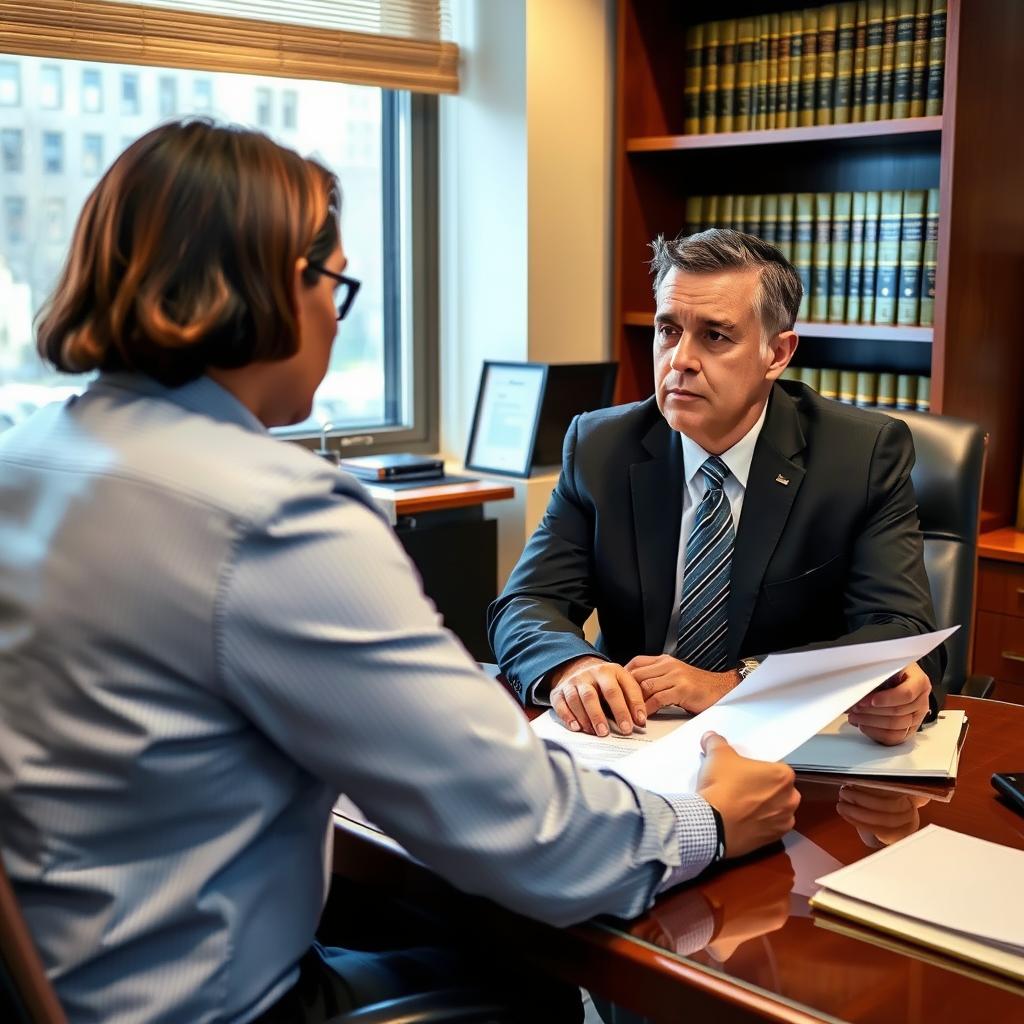
Breath Test Refusal Lawyer Capitol Hill, DC
If law enforcement stops you on suspicion of driving under the influence in the Capitol Hill area of Washington, D.C., and you refuse to submit to a breath or blood test, you face potential administrative license suspension and separate court proceedings at D.C. Superior Court. The District’s implied consent law imposes consequences for refusal even if you are never convicted of DUI. You may have questions about your rights, the refusal hearing process, and how to challenge a license suspension or related criminal charge. Capitol Hill residents who commute, use ride‑share services, or depend on a driver’s license for work need prompt guidance to protect their driving record and ability to travel. Mr. Sris and his Of Counsel team at Law Offices Of SRIS, P.C. Concentrate on traffic defense and represent clients in breath test refusal matters throughout the District. To discuss your Capitol Hill case, call (888) 437‑7747. Law Offices Of SRIS, P.C. — Advocacy Without Borders.
What Breath Test Refusal Means in Capitol Hill
When you drive on District of Columbia roadways, you are deemed to have consented to a chemical test of your breath or blood if law enforcement has reasonable grounds to suspect impairment. Refusal to submit to such a test after being lawfully arrested for DUI triggers an administrative license suspension action through the D.C. Department of Motor Vehicles. The DMV may suspend your driving privileges independently of any criminal charge. Capitol Hill residents who rely on driving for commuting or caring for family face immediate practical concerns if their license is suspended, and need an advocate who understands how the administrative and court systems interact.
Criminal traffic cases, including DUI and refusal‑related charges, are heard at the D.C. Superior Court, located at 500 Indiana Avenue NW, within the Capitol Hill neighborhood. The court is easily reached from Judiciary Square Metro on the Red Line and from major corridors such as Interstate 395 and Constitution Avenue. Law Offices Of SRIS, P.C. serves Capitol Hill clients from its Arlington location, approximately 4.5 miles from the courthouse. Mr. Sris and his Of Counsel appear regularly in D.C. Superior Court for traffic matters and understand the local procedures and the practical implications of a refusal allegation.
How Mr. Sris and His Of Counsel Handle Breath Test Refusal Cases
Mr. Sris and his Of Counsel approach each breath test refusal matter by examining the law enforcement encounter from the initial stop through the arrest. They scrutinize whether officers had reasonable suspicion to initiate the traffic stop and probable cause to request a chemical test. In many instances, procedural defects in the administration of the implied consent warning, inconsistencies in the officer’s report, or other factual issues may provide grounds to challenge the refusal allegation. The team also evaluates the possibility of resolving the matter through negotiation with the DMV or the prosecutor to minimize the impact on the client’s driving privileges.
If a hearing is scheduled at the D.C. DMV Adjudication Services or before the D.C. Superior Court, the firm prepares thoroughly—gathering evidence, interviewing witnesses, and presenting a well‑prepared defense. At all stages, the goal is to protect the client’s license and reduce the consequences of the refusal charge. The team works collaboratively, drawing on over 120 years of combined legal experience between Mr. Sris and his Of Counsel and 4,739+ documented firm-wide results. Results may vary.
About Mr. Sris and His Of Counsel Team
Mr. Sris, Owner and Founder of Law Offices Of SRIS, P.C., is a former prosecutor with extensive experience in criminal and traffic defense. He founded the firm in 1997 and is admitted to practice in Virginia, Maryland, the District of Columbia, New Jersey, and New York. Mr. Sris testified before the Virginia House Courts of Justice Committee in support of 2019 HB 635 (chief patron Del. David Bulova).
The firm’s Of Counsel attorneys bring decades of additional experience and handle cases collaboratively with Mr. Sris. Every attorney at the firm has over a decade of practice experience. The team draws on more than 120 years of combined legal experience and 4,739+ documented firm-wide results. Results may vary. The Arlington location — 1655 Fort Myer Dr, Suite 700, Room 719, Arlington, VA 22209 — serves Capitol Hill clients by appointment. Call (888) 437‑7747 to schedule a consultation.
Frequently Asked Questions
What is implied consent in the District of Columbia?
Implied consent means that by driving on D.C. Roads you automatically agree to submit to a breath or blood test if an officer has reasonable suspicion of impairment. Refusing such a test can trigger an administrative license suspension separate from any criminal DUI charge. The suspension is handled by the D.C. Department of Motor Vehicles, not the court. You have the right to a hearing to contest the refusal and to be represented by counsel throughout the process.
What happens if I refuse a breath test in D.C.?
Refusing a breath test in D.C. Triggers an administrative license suspension and may be used as evidence against you in a criminal DUI prosecution. The DMV will mail you a notice of the proposed suspension and instructions for requesting a hearing. If you do not request a hearing within the applicable time frame, the suspension takes effect automatically. You may also face separate charges in D.C. Superior Court if the officer files a criminal complaint. The outcome of each proceeding can affect the other, so it is important to address both with an experienced traffic defense attorney.
Can I fight a breath test refusal suspension in D.C.?
Yes, you can request an administrative hearing to contest a proposed license suspension for breath test refusal. At the hearing, you may challenge the officer’s basis for the stop, the validity of the arrest, whether the implied consent warning was properly given, and other procedural aspects. The DMV hearing officer will consider the evidence and decide whether to sustain or dismiss the suspension. An experienced attorney can present arguments and evidence to protect your driving privileges. If the suspension is imposed, the duration depends on the specific facts of your case and your driving record.
Do I need a lawyer for a breath test refusal in Capitol Hill?
While you are not legally required to have an attorney, a breath test refusal carries significant consequences for your license and any related criminal charges, so legal representation is strongly advised. An attorney can represent you at the DMV hearing, negotiate with prosecutors, and appear with you in D.C. Superior Court. Mr. Sris and his Of Counsel team concentrate on traffic defense and understand the interplay between the administrative and criminal systems in the District. Having counsel may help you obtain a more favorable outcome than proceeding alone.
How does a refusal affect a DUI case in D.C.?
A refusal may be introduced as evidence of consciousness of guilt in a criminal DUI trial, but the prosecution must still prove every element of the DUI charge beyond a reasonable doubt. The court will consider all admissible evidence, including officer observations, field sobriety tests (if any), and driving patterns. A refusal alone does not automatically prove intoxication, and a skilled defense can challenge the overall case. The attorney can also argue that the refusal stemmed from confusion, language barriers, or medical reasons rather than a desire to hide evidence.
For guidance on your specific situation, reach Law Offices Of SRIS, P.C. at (888) 437‑7747.
Washington, D.C. Traffic lawyer ·
Georgetown traffic attorney ·
Spring Valley traffic lawyer ·
Cleveland Park traffic attorney ·
Chevy Chase traffic lawyer
Attorney advertising. Prior results do not guarantee a similar outcome.
Case results depend on a variety of factors unique to each case.