
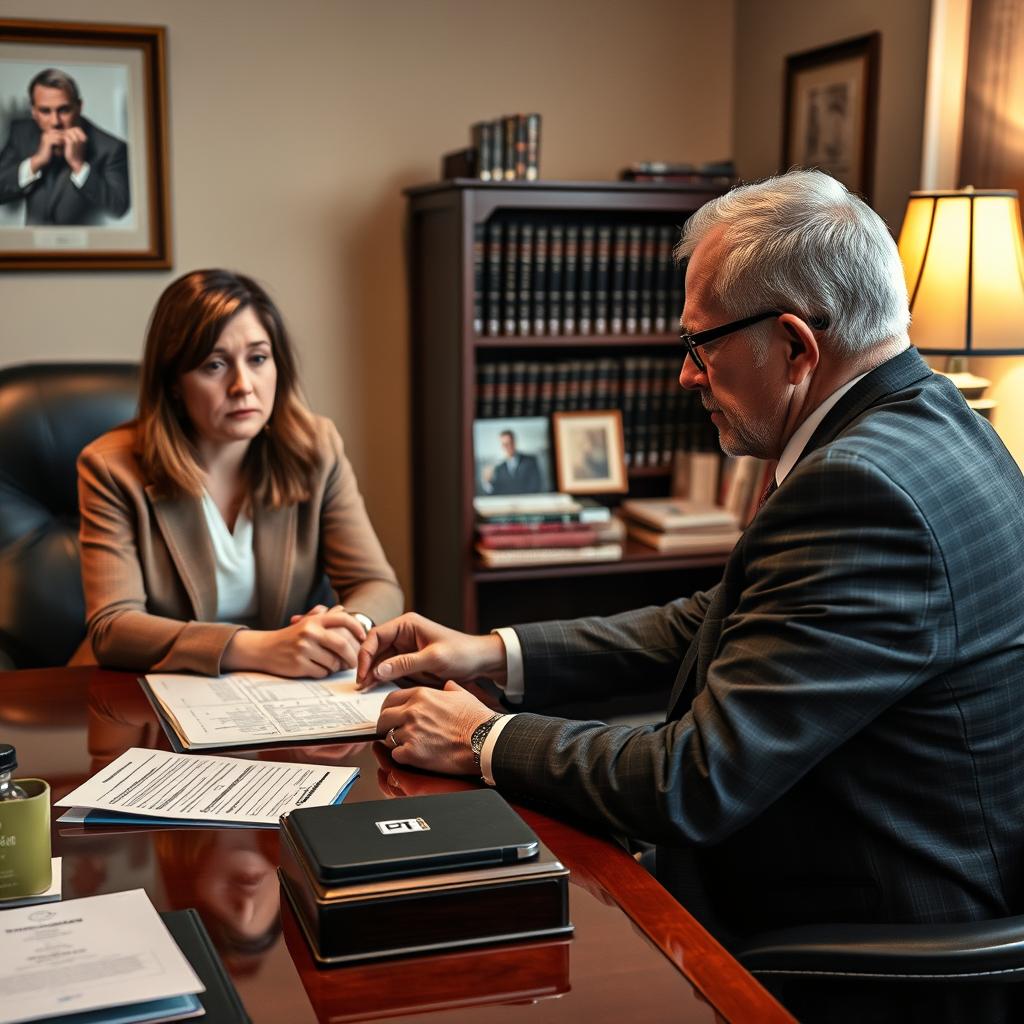
Can a DUI be dismissed in Chenango County
A DUI charge can be dismissed in Chenango County when the evidence against you is insufficient, when law enforcement failed to follow required procedures, or when constitutional issues undermine the prosecution’s case. Dismissal is never automatic, but Mr. Sris and his Of Counsel analyze each matter for every opportunity to challenge the stop, the testing, and the charges. A DUI arrest is handled in the Chenango County Supreme Court, and the outcome depends on the specific facts of your situation. To discuss your arrest and learn what defenses may apply, reach Law Offices Of SRIS, P.C. at (888) 437‑7747. Law Offices Of SRIS, P.C. – Advocacy Without Borders.
How a DUI Can Be Dismissed in New York
In New York, a driving‑while‑intoxicated charge may be dismissed before trial or after a hearing if the prosecution cannot meet its burden. Common legal grounds for seeking dismissal include an unlawful traffic stop, a lack of probable cause to make an arrest, violations of the driver’s Miranda rights, or defects in the chemical‑test process. The police must follow detailed protocols set out by the New York Vehicle and Traffic Law and the Division of Criminal Justice Services. When a step is missed—an improperly calibrated breath test instrument, an officer who fails to observe the required pre‑test observation period, or a stop based on a vague tip rather than a personal observation of impaired driving—a motion to suppress evidence can result in a court order that effectively ends the case.
In Chenango County, DUI and DWAI cases are heard at the Chenango County Supreme Court, located at 5 Court Street, Norwich, New York. Mr. Sris and his Of Counsel are familiar with the procedural expectations in this courthouse and with the local District Attorney’s office. Motions challenging the legal basis for the stop or the reliability of the evidence are evaluated under the same statewide statutes, but familiarity with how the court handles these issues matters. No two DUI arrests are identical, and the viability of any dismissal argument depends on the unique facts of the matter.
Frequently Asked Questions
What are the most common grounds for DUI dismissal in Chenango County?
A DUI can be dismissed when the traffic stop was invalid, the evidence was obtained in violation of your rights, or the chemical test is unreliable. The most common defense motions target an illegal stop—such as an officer pulling you over without a reasonable suspicion of a violation—or a breath-test result that cannot be authenticated because the officer failed to administer the test within two hours of the stop or did not follow the required observation period. Constitutional violations, including a failure to provide Miranda warnings before a custodial interrogation, can also lead to suppression of statements and, in some cases, dismissal of the charge entirely.
How does a DUI case begin in Chenango County court?
A DUI case in Chenango County begins with an arraignment at the Chenango County Supreme Court, where you are formally advised of the charge and your rights, and a plea is entered. Following arraignment, the court schedules further proceedings, including pre‑trial conferences and motion hearings. Defense counsel may file motions to challenge the stop, the arrest, or the chemical‑test evidence. If the motions are successful—for example, a judge finds that the stop was unlawful—the charge may be dismissed before trial. If the matter proceeds, it is scheduled for a bench or jury trial. Throughout this process, experienced counsel can identify procedural weaknesses that limit the prosecution’s case.
Do I need a lawyer for a DUI charge in Chenango County?
You have the right to represent yourself, but a DUI charge is a serious matter that can affect your license, your livelihood, and your freedom—an experienced attorney can identify defenses and procedural issues you may not recognize. Even a first‑offense DWI in New York carries potential jail time, mandatory fines, a license revocation, and the installation of an ignition interlock device. A lawyer who understands how the Chenango County Supreme Court handles DUI matters can evaluate whether a motion to dismiss is viable and, if dismissal is not available, negotiate for a reduction or work to minimize the consequences. To discuss your case, request a consultation with Mr. Sris and his Of Counsel at (888) 437‑7747.
Can a DUI be dismissed if the breath test was refused?
Yes, a DUI charge can still be dismissed even if you refused a chemical test—refusal is a separate administrative penalty, not proof of guilt. New York’s refusal law imposes a one‑year license revocation for a first refusal, but the prosecution must still prove that you were operating a vehicle while intoxicated. If the officer lacked probable cause for the stop or the arrest, or if the observation‑based evidence of impairment is weak, a motion to dismiss may be filed. An attorney may also challenge the refusal warnings themselves if they were not properly administered. Dismissal is possible, but every case turns on its own facts.
What is the difference between a DUI and a DWAI in New York?
In New York, DUI generally refers to driving while intoxicated, a misdemeanor offense, while DWAI—driving while ability impaired—can be a traffic infraction or a violation depending on whether it involves alcohol or drugs. A DWI charge under Vehicle and Traffic Law § 1192(2) or (3) requires proof of a blood alcohol content of 0.08 percent or higher, or proof of intoxication regardless of BAC. A DWAI‑Alcohol charge under § 1192(1) requires only a showing of impairment to any extent, and a first offense is a traffic infraction, not a crime. The distinction matters significantly, because a DWAI is often resolved without a criminal record. Dismissal of a DWI can sometimes result in a reduction to DWAI, but the availability of that outcome depends on the evidence and the court’s assessment.
How does an attorney challenge the traffic stop in a Chenango County DUI case?
An attorney challenges the traffic stop by filing a motion to suppress, arguing that the officer lacked reasonable suspicion for the stop or exceeded the permissible scope of the stop. Under New York law, police must have a specific, articulable reason to pull a vehicle over—such as a traffic violation, erratic driving, or a tip from a reliable informant. If the defense can show that the stop was based on a hunch, a profile, or an anonymous uncorroborated call, the stop may be ruled illegal and all evidence obtained after the stop—including observations of impairment and chemical‑test results—may be excluded. Without that evidence, a dismissal often follows.
Can a DUI be dismissed because of a faulty breath test machine?
A DUI can be dismissed if the defense proves the breath‑test instrument was not properly calibrated, maintained, or operated, or if the officer did not follow the required testing protocol. New York regulations require regular calibration checks, simulator‑solution certification, and strict procedures for administering the test. When maintenance logs show gaps or inconsistencies, or when the officer does not observe the driver for the mandatory period before the test, the result may be excluded. If the breath test is the primary evidence of intoxication and is suppressed, the prosecution may be unable to meet its burden, experienced to a dismissal.
What role does the prosecutor play in dismissing a DUI in Chenango County?
The District Attorney’s office has the discretion to dismiss a DUI charge at any stage—before trial, after a motion, or even during trial—if it concludes the evidence is insufficient or that continuing the case is not in the interest of justice. In practice, a prosecutor is most likely to agree to a dismissal when a defense motion to suppress has exposed a significant legal deficiency, or when a key witness becomes unavailable. An attorney who can persuasively present the weaknesses in the case to the prosecutor can often obtain a favorable resolution without a trial. However, the decision belongs to the prosecutor; no attorney can promise a dismissal.
Is it possible to get a DUI dismissed if you were parked when arrested?
Yes, a DUI can be dismissed if the prosecution cannot prove you operated the vehicle while intoxicated—parking alone does not satisfy the ‘operate’ element of the charge. New York’s DWI statute requires proof that the defendant was operating a motor vehicle. If you were found parked with the engine off and no witness can place you behind the wheel while the vehicle was in motion, the prosecution may have difficulty meeting its burden. However, circumstantial evidence—such as the vehicle’s location, the position of the keys, or an admission—can still be used. A thorough investigation of these facts by a lawyer can determine whether a dismissal motion is warranted.
How long does a DUI case typically take in Chenango County?
The timeline for a DUI case in Chenango County varies, but many cases resolve within a few months, while those that go to trial can take longer. The court’s calendar, the complexity of the motions filed, and the availability of witnesses all affect the timeline. Motions to dismiss are typically heard early in the process, which means a dismissal can occur relatively quickly if grounds exist. An experienced attorney can help you understand what to expect in your particular matter. For a sense of the current court schedule, reach Law Offices Of SRIS, P.C. at (888) 437‑7747.
What should I do immediately after a DUI arrest in Chenango County?
After a DUI arrest in Chenango County, you should exercise your right to remain silent, request an attorney, and do not discuss the facts of your stop or arrest with anyone except your lawyer. Preserve all documents you received, including the ticket, the refusal‑warning notice, and any paperwork from the officer or the court. Write down your own recollection of the events as soon as possible—what you were doing before the stop, what the officer said, and anything unusual about the interaction. Promptly request a consultation with a lawyer who handles DUI matters in Chenango County, because early intervention can sometimes affect the viability of a dismissal.
How does Mr. Sris and his Of Counsel approach a DUI case in Chenango County?
Mr. Sris and his Of Counsel review the entire arrest record, looking for procedural errors, constitutional violations, and any break in the prosecution’s chain of evidence that could support a motion to dismiss. They analyze the police report, the dash‑cam and body‑camera footage, the breath‑test calibration records, and the officer’s training history. They then discuss with you the strengths and weaknesses of your case and explain whether a dismissal motion is realistic. If dismissal is not available, they work toward a reduction or other favorable outcome. To discuss your DUI matter, request a consultation at (888) 437‑7747.
About Mr. Sris and His Of Counsel
Mr. Sris, Owner and Founder of Law Offices Of SRIS, P.C., began practicing in 1997 and is admitted in Virginia, Maryland, the District of Columbia, New Jersey, and New York. He is a former prosecutor who has testified before the Virginia House Courts of Justice Committee in support of 2019 HB 635 (chief patron Del. David Bulova). Alongside his Of Counsel, he represents drivers facing DUI charges in New York. Over 120 years of combined legal experience between Mr. Sris and his Of Counsel, with 4,739+ documented firm-wide results, are brought to each matter. Results may vary. The firm serves clients in Chenango County and across the Southern Tier from its New York location. Reach Law Offices Of SRIS, P.C. at (888) 437‑7747 to request a consultation.
Case results depend on a variety of factors unique to each case. Attorney advertising. Prior results do not guarantee a similar outcome. Results may vary.