
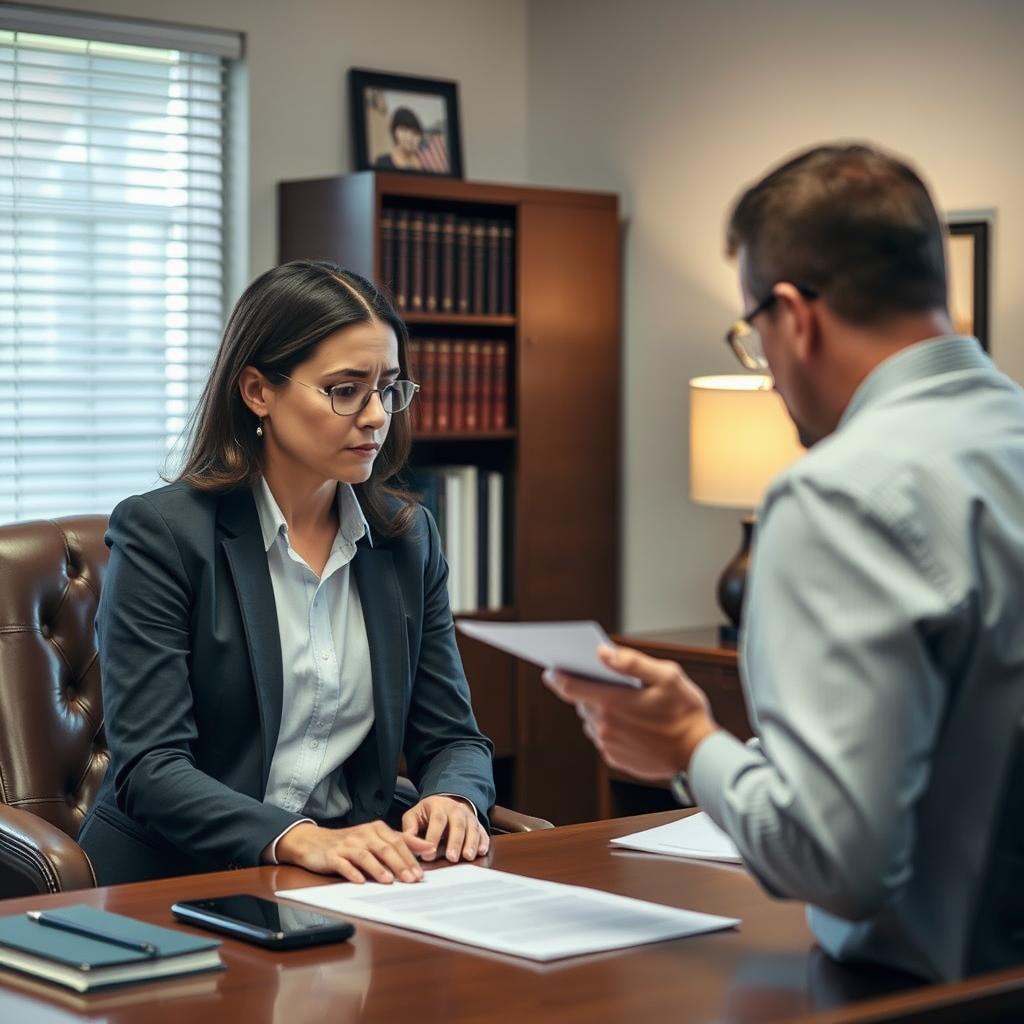
What happens at a DUI arraignment in Fluvanna County
A DUI arraignment in Fluvanna County is the first formal court appearance after a driving‑under‑the‑influence charge, held at the Fluvanna County General District Court at 72 Main Street, Suite B, Palmyra, VA 22963. The judge advises the defendant of the specific charge—typically a Class 1 misdemeanor under Va. Code § 18.2‑266—and of the right to an attorney. The defendant enters a plea of guilty, not guilty, or nolo contendere, and the court sets any release conditions, such as bond or recognizance. At the arraignment, the judge does not hear testimony or weigh evidence; that occurs later if the case is contested. The proceeding is recorded and establishes the procedural path for the case, including the scheduling of a trial date if a not‑guilty plea is entered. For guidance on your DUI charge, contact Law Offices Of SRIS, P.C. at (888) 437‑7747.
Understanding the Fluvanna County DUI arraignment step by step
When an individual is charged with DUI—driving under the influence of alcohol, drugs, or both—in Fluvanna County, the first court event is almost always an arraignment before a General District Court judge. The proceeding is relatively brief, typically lasting only a few minutes, but it carries several important legal functions. The judge begins by reading the charge aloud or reciting it from the summons, ensuring the defendant understands the accusation. The court then verifies the defendant’s identity and asks whether the defendant wishes to be represented by an attorney. If the defendant cannot afford private counsel, the judge may determine eligibility for court‑appointed counsel after asking about income and assets.
After the rights advisement, the court asks for the defendant’s plea. The three options are guilty, not guilty, or nolo contendere. A guilty plea leads to sentencing, which generally happens immediately or at a separate disposition hearing. A not‑guilty plea results in the case being set for a bench trial, which in Fluvanna County General District Court usually occurs four to eight weeks after the arraignment. A nolo contendere plea has the same effect as a guilty plea for sentencing purposes but cannot be used as an admission of guilt in a related civil proceeding. The Commonwealth’s Attorney may, before the arraignment or at it, indicate a willingness to negotiate a plea agreement; however, the judge does not participate in the negotiation. After the plea is entered, the court addresses release conditions. The judge may release the defendant on a personal recognizance bond, set a secured bond, or impose conditions such as abstention from alcohol and a requirement to enroll in the Virginia Alcohol Safety Action Program. The court may also address any administrative license suspension that was imposed at the time of arrest.
Frequently Asked Questions
What is a DUI arraignment in Fluvanna County?
A DUI arraignment in Fluvanna County is the first court hearing where the defendant is formally advised of the DUI charge and enters a plea. The hearing takes place at the Fluvanna County General District Court. The judge ensures the defendant understands the charge under Va. Code § 18.2‑266, advises of the right to counsel, and asks for a plea. The arraignment also covers release conditions such as bond and any pretrial supervision requirements. The Commonwealth’s Attorney may be present but typically the hearing is procedural—no evidence is presented and no witnesses testify. The judge will set a future trial date if the defendant pleads not guilty. For anyone unsure about the process, consulting an experienced DUI defense lawyer before the arraignment can help you understand the likely course of the case.
Do I need a lawyer for my DUI arraignment?
You are not legally required to have a lawyer at a Fluvanna County DUI arraignment, but having an attorney at this early stage provides several practical advantages. Your lawyer can ensure the charge is correctly stated, advise you on the most advantageous plea based on the evidence, and negotiate with the Commonwealth’s Attorney even during the arraignment. If there are procedural defects in the charging documents, your attorney can raise them immediately. The arraignment is when you first hear the prosecution’s position, so having counsel present helps you make informed decisions about bail conditions, license issues, and scheduling. For indigent defendants, the court can appoint a public defender, but the public‑defender system may not be able to provide the same level of individual case review early in the case.
What should I bring to my DUI arraignment at Fluvanna County General District Court?
Bring your summons, a copy of the charging document, any bail paperwork, and a photo identification to your Fluvanna County DUI arraignment. Also carry proof of your current address and employment if you anticipate the court will consider release conditions, as the judge may inquire about community ties. If you have completed an alcohol-education program or a substance-abuse evaluation on your own before the court date, bring that documentation as well; it can be offered to the court as evidence of responsible behavior. Cell phones are generally permitted in the courthouse but must be silenced. Dress conservatively—shorts, tank tops, and hats should be avoided—because the judge forms an impression of the defendant from the first appearance. Arrive early to locate the correct courtroom at 72 Main Street, Suite B, Palmyra, VA 22963, and allow time to pass through security.
What plea options do I have at a DUI arraignment?
At a Fluvanna County DUI arraignment you may plead guilty, not guilty, or nolo contendere (no contest). A guilty plea results in conviction; the judge may sentence you on the spot or schedule a separate sentencing hearing. A not‑guilty plea sets the case for a bench trial, typically within four to eight weeks. A nolo contendere plea has the same effect as a guilty plea for the DUI prosecution but cannot be used as an admission of guilt in a subsequent civil proceeding—for example, a personal‑injury lawsuit arising from the same incident. It is critical to discuss the strategic implications of each plea with your lawyer before the arraignment because the choice can affect your driver’s license status, insurance rates, and any related administrative proceedings. Do not plead without legal advice.
Can I get a continuance at my DUI arraignment?
Yes, the Fluvanna County General District Court judge has discretion to grant a continuance at the DUI arraignment if good cause is shown. A continuance may be requested because you have not yet retained an attorney, need more time to gather evidence, or are negotiating a plea agreement with the Commonwealth’s Attorney. The judge will consider whether the delay would prejudice the prosecution or violate your speedy-trial rights. A continuance is not automatic; you or your lawyer must appear in person and make the motion. Having an attorney present significantly improves the chance that the continuance will be granted on reasonable terms. The court may reset the matter for a future arraignment or directly for a trial date, depending on the circumstances.
What happens if I miss my DUI arraignment?
Missing a Fluvanna County DUI arraignment can lead to the immediate issuance of a bench warrant for your arrest and a separate charge for failure to appear. A DUI is a criminal offense in Virginia, so the court takes non‑appearance seriously. If you realize you will miss the date, contact your lawyer immediately. Your attorney may be able to move to recall the warrant and reschedule the arraignment, but that depends on the judge and how quickly action is taken. If a warrant is issued, law enforcement may arrest you at home, at work, or during a traffic stop, and you may be held until a new bail hearing. Always prioritize making your court date and, if an emergency arises, have someone notify the court promptly.
Will the judge consider bail at my DUI arraignment?
Yes, the Fluvanna County General District Court judge addresses release conditions—including bail—at the DUI arraignment. For a first‑offense DUI, the court often releases the defendant on a personal recognizance bond, meaning no money is required but the defendant must promise to appear at future court dates and comply with any conditions the judge sets. Conditions may include avoiding alcohol, submitting to random testing, and enrolling in the Virginia Alcohol Safety Action Program (VASAP). If the DUI involved a high blood‑alcohol content, an accident, or an injury, the judge may set a secured bond requiring cash or a bondsperson. The judge will consider factors such as the defendant’s ties to the community, prior record, employment, and the strength of the evidence before deciding on bail.
How long after the arrest is the DUI arraignment?
In Fluvanna County, a DUI arraignment typically occurs within a few weeks of the arrest, though the exact timing depends on the court’s calendar and when the summons was issued. If the defendant was released on a summons after arrest, the arraignment date will be printed on the summons. If the defendant was held in custody, the court will schedule the arraignment as soon as practicable—often within days. For most first‑offense DUI cases, the arraignment takes place within two to six weeks of the incident. Defendants who are not in custody should carefully check the summons for the correct date and time. Missing the arraignment carries serious consequences, so it is important to confirm the appearance date as soon as possible after the arrest.
Can I plead not guilty and then change my plea later?
Yes, after pleading not guilty at your Fluvanna County DUI arraignment, you can later change your plea to guilty or nolo contendere up until the trial date. A not‑guilty plea preserves your right to challenge the evidence and negotiate with the Commonwealth’s Attorney. Once you have reviewed the police report, the breath‑test results or any blood‑test data, and any video footage, you and your lawyer may determine that a plea agreement is in your best interest. At that point, you can enter a negotiated plea that the judge must approve. The court will not penalize you for changing your plea, but a last‑minute change on the trial date may inconvenience the court and the witnesses, which can influence the judge’s sentencing discretion.
What is the difference between a DUI arraignment and a trial?
The arraignment is a procedural hearing to advise the defendant of the charges and accept a plea, while the trial is the proceeding where evidence is presented and the judge decides guilt or innocence. At the arraignment, the judge does not hear testimony, review exhibits, or consider the merits of the case. The trial, set weeks later, is the adversarial proceeding where the Commonwealth must prove each element of the DUI offense beyond a reasonable doubt. Your lawyer can cross‑examine the arresting officer, challenge the admissibility of the breath or blood test, and present your own evidence. In Fluvanna County General District Court, trials are bench trials, meaning the judge serves as the fact‑finder without a jury. If convicted, you have a right to appeal to the Circuit Court for a de novo trial.
Can the charges be reduced at the arraignment?
While a reduction does not occur automatically at the arraignment, a DUI charge in Fluvanna County can be reduced to a lesser offense if the Commonwealth’s Attorney agrees and the judge approves. A reduction to reckless driving or even a non‑criminal traffic infraction may be possible depending on the facts, the defendant’s record, and the strength of the evidence. Such agreements are typically negotiated before or at the arraignment, though the formal reduction may take place at the trial date. Having an experienced DUI defense attorney at your side from the beginning of the case increases the likelihood that a reduction will be considered. The judge retains ultimate authority to accept or reject any plea agreement.
Does the arraignment determine my driver’s license status?
The arraignment itself does not determine your driver’s license status, but the judge may address any pending administrative license suspension that took effect at the time of your arrest. In Virginia, refusing a breath test or registering a blood‑alcohol concentration of 0.08% or higher triggers an automatic seven‑day administrative license suspension, which is separate from any criminal prosecution. The arraignment judge may advise you of the suspension and inform you of the right to request an administrative hearing before the Virginia Department of Motor Vehicles. Your license can also be suspended as a condition of bond or as part of a conviction. Because license issues move quickly, you should discuss your driving privileges with your attorney immediately after the arraignment.
About Mr. Sris and His Of Counsel Team
Mr. Sris, Owner and Founder of Law Offices Of SRIS, P.C., is a former prosecutor who has practiced since 1997 and is admitted in Virginia, Maryland, the District of Columbia, New Jersey, and New York. He personally handles a limited number of complex criminal matters, drawing on his background in accounting and information systems to address technical evidence—including breath‑test and field‑sobriety‑test challenges—in DUI cases. Mr. Sris and his Of Counsel team bring over 120 years of combined legal experience. Results may vary. Firm‑wide, Mr. Sris and his Of Counsel have documented 4,739+ case results across all practice areas.
Our Shenandoah Location at 505 N Main St, Suite 103, Woodstock, VA 22664 serves Fluvanna County clients, and appointments are available by request. One member of our Of Counsel team is a former Virginia State Trooper whose knowledge of police procedures, traffic‑investigation standards, and enforcement tactics provides a unique perspective in DUI defense. Contact Law Offices Of SRIS, P.C. at (888) 437‑7747 to schedule a consultation.
For additional information, consult these official resources: Virginia Code Title 18.2 (Criminal Offenses) · Fluvanna County General District Court · Virginia’s Judicial System
Attorney advertising. Prior results do not guarantee a similar outcome. Results may vary.
Case results depend on a variety of factors unique to each case.