
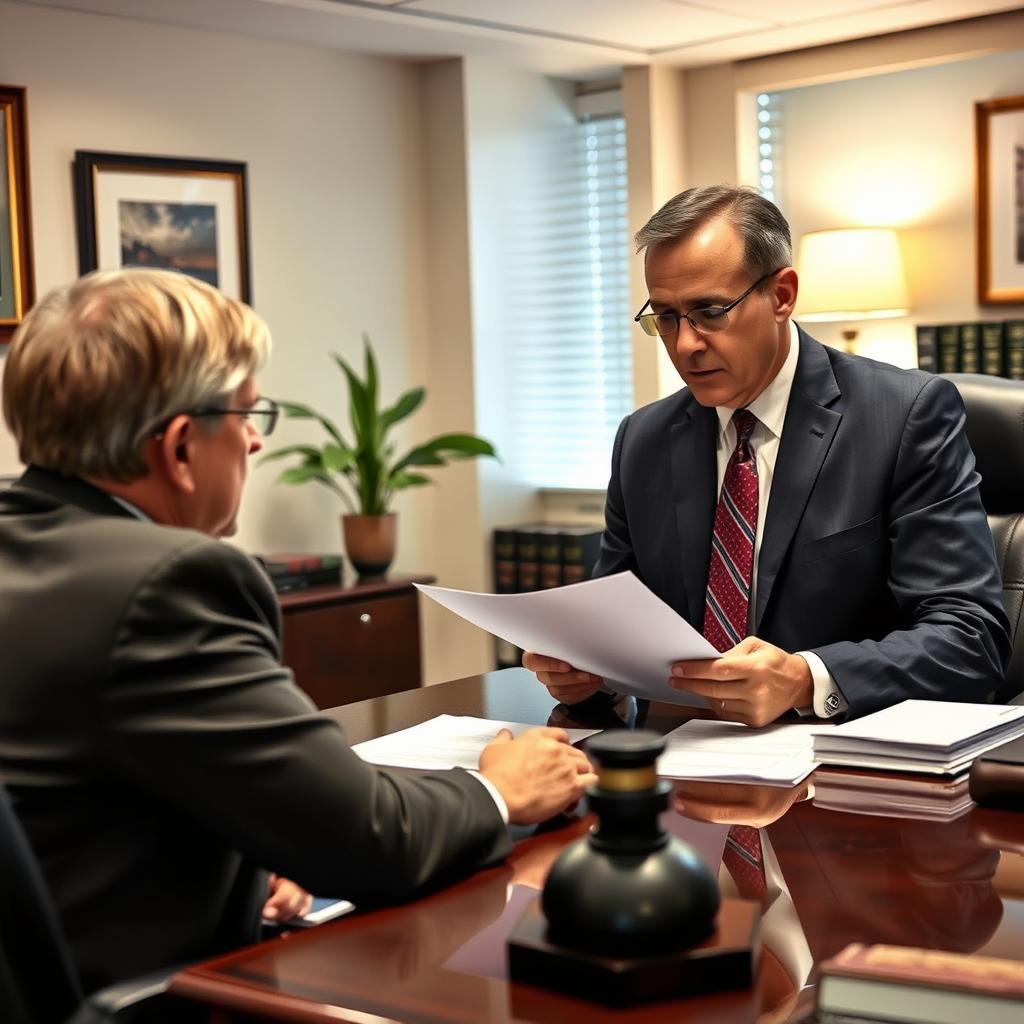
What happens at a DUI arraignment in Westchester County
You were arrested for driving while intoxicated on the Taconic Parkway or a quiet Westchester village street late on a weekend night, taken to the police barracks, processed, and handed a desk appearance ticket or an appearance ticket with a court date. Now you are facing a DWI charge in Westchester County and the first court date is approaching. That first appearance is called an arraignment, and while it may seem like a formality, what happens there can shape the course of your entire case. If you have never been inside a Westchester town or village court, you may wonder whether you are going to jail, what you should say, and whether you need a lawyer. The arraignment is a formal reading of the charge under New York Vehicle and Traffic Law § 1192 and an opportunity for you to enter a plea, but it is also the moment when bail is set, your license may be suspended, and critical procedural deadlines begin to run. Having an experienced attorney appear with you can make a significant difference in the outcome. Reach Law Offices Of SRIS, P.C. at (888) 437‑7747 to discuss your Westchester County DWI matter before your arraignment. Law Offices Of SRIS, P.C. – Advocacy Without Borders.
What happens at the arraignment in a Westchester County DWI case
In Westchester County, a DWI arrest can land you in any one of dozens of local criminal courts—White Plains City Court, Yonkers City Court, New Rochelle City Court, Mount Vernon City Court, or one of the many town or village justice courts, such as Greenburgh Town Court, Scarsdale Village Court, or Ossining Town Court. The arraignment is your first appearance before a judge. The court will advise you of the charge, usually by reading the complaint or information aloud. If you are charged with a misdemeanor or felony DWI, you will be asked how you plead. A guilty plea at arraignment is almost never advisable because you give up your right to challenge the evidence and to negotiate a reduction. A not‑guilty plea preserves your options, and that is what most defense attorneys recommend. If you have not yet retained counsel, you can ask the court for an adjournment to obtain a lawyer.
The judge will also address the issue of bail or release. For a first‑offense misdemeanor DWI, you may be released on your own recognizance, particularly if you have ties to the community, but the court can set bail if there is a prior record or other risk factors. For a felony DWI—for example, a second DWI within ten years or a DWI with a child in the vehicle—the judge may set bail or require a supervised release program. Additionally, at arraignment the prosecutor will typically ask for a suspension of your New York driving privileges pending prosecution, a procedure known as a “prompt suspension.” Your attorney can contest that suspension at a hearing scheduled shortly after the arraignment.
What you should do before and during your Westchester County DWI arraignment
Several steps can help you manage the arraignment and protect your rights. First, obtain a copy of the accusatory instrument from the court if one was not provided with your appearance ticket. Read it carefully; it will list the specific VTL section you are charged under, such as VTL § 1192(2) (driving with a blood alcohol content of .08 or higher), § 1192(3) (common‑law intoxication), or § 1192(1) (driving while ability impaired). Knowing the charge tells you the possible penalties and whether it is a misdemeanor or felony.
Second, dress respectfully for court and arrive early. Westchester town and village courts are formal, and making a good impression matters. Third, do not discuss the facts of your case with anyone except your attorney—not the police, not the prosecutor, not even family members in the courtroom. Anything you say can be used against you later. Fourth, if you have not yet hired an attorney, ask the court for an adjournment to do so. You have a right to counsel, and a judge will grant a reasonable time to secure representation. Finally, follow any conditions the court imposes, such as attending a screening with the Westchester County STOP‑DWI program, and be sure to return on the next scheduled date.
What follows the arraignment
After a not‑guilty plea is entered, the court will set a date for a pretrial conference or a suppression hearing. In Westchester County, the local court handles the discovery process: the prosecution must turn over police reports, breath‑test records, calibration certificates, and any video or audio recordings. Your attorney will review that evidence for constitutional and procedural defects—for instance, whether the traffic stop was lawful, whether field sobriety tests were administered according to National Highway Traffic Safety Administration standards, and whether the breath‑testing instrument was properly calibrated and operated by a certified technician. If evidence was obtained in violation of your rights, your attorney may file a suppression motion. Depending on the strength of the evidence, the prosecutor may offer a plea to a reduced charge, such as driving while ability impaired (DWAI) under VTL § 1192(1), which is a traffic infraction rather than a crime. The timeline from arraignment to resolution varies by court, but many misdemeanor DWI cases in Westchester are resolved within a few months, while cases that go to trial or involve felony charges can take longer.
Potential penalties if you are convicted of DWI in Westchester County
A conviction under VTL § 1192 carries consequences that extend far beyond a fine. For a first offense misdemeanor DWI, you face up to one year in jail, a fine of up to $1,000, a six‑month license revocation, and a mandatory surcharge. A second DWI within ten years is a Class E felony, carrying up to four years in state prison and a one‑year license revocation. New York also mandates an ignition interlock device for any DWI conviction, and the Westchester County District Attorney’s Office often seeks enrollment in the Victim Impact Panel and the STOP‑DWI program. In addition to criminal penalties, a DWI conviction creates a permanent criminal record, raises auto insurance rates substantially, and can affect your employment, especially if you hold a commercial driver’s license or a professional license. These consequences underscore why you should not walk into a Westchester court alone without seasoned counsel who regularly handles DWI defense in the county.
About Mr. Sris and his Of Counsel team
Mr. Sris, Owner and Founder of Law Offices Of SRIS, P.C., is a former prosecutor who has practiced criminal and traffic defense since 1997. He is admitted to practice in New York as well as Virginia, Maryland, the District of Columbia, and New Jersey. Mr. Sris and his Of Counsel bring over 120 years of combined legal experience to the representation of clients facing DWI and traffic charges, backed by 4,739+ documented firm-wide results. Results may vary. The team understands the procedural nuances of Westchester County’s local courts and the negotiating posture of the District Attorney’s Office, and they work diligently to secure a favorable resolution for each client. Reach Law Offices Of SRIS, P.C. at (888) 437‑7747 to request a consultation before your arraignment.
Frequently Asked Questions
What happens at a DUI arraignment in Westchester County?
At a DWI arraignment in Westchester County, the judge formally reads the charge under the New York Vehicle and Traffic Law, asks how you plead, and determines bail and whether your license will be suspended pending prosecution. This is your first court appearance after an arrest; you will be advised of your rights, the prosecutor will be present, and the court will schedule the next date. You can plead not guilty, which preserves your right to challenge the evidence and negotiate a potential reduction. If you do not have a lawyer, you should ask the court for time to retain one.
Do I need a lawyer at my DWI arraignment in Westchester County?
You are not required to have a lawyer present, but it is strongly advisable. The arraignment sets the terms under which your case will proceed, including whether your license is suspended and whether you remain free pending trial. An experienced attorney can argue against a license suspension, negotiate a favorable bail or release status, and begin gathering the evidence that may lead to a dismissal or reduction. Without counsel, you risk making statements that can be used against you or accepting a quick plea that carries long‑term consequences.
Can my DWI case be dismissed at the arraignment?
A dismissal at arraignment is rare, but it can happen if the accusatory instrument is legally insufficient on its face—for example, if it fails to allege an essential element of the offense. Your attorney can move to dismiss the complaint if it does not state that you operated a motor vehicle on a public highway while intoxicated or with a prohibited BAC. More commonly, dismissal or reduction occurs later after discovery reveals weaknesses in the prosecution’s evidence. At arraignment, the primary goal is to enter a not‑guilty plea and preserve all defenses.
Will I go to jail at my DWI arraignment in Westchester?
Most first‑offense misdemeanor DWI defendants are released on their own recognizance and do not go to jail at arraignment. However, the court can set bail or remand you if you have a significant criminal record, are charged with a felony DWI, or appear to pose a flight risk. In Westchester, judges consider community ties, employment, and the seriousness of the charge. Having an attorney to advocate for your release can reduce the risk of incarceration at the first appearance.
What is the difference between a DWI and a DWAI in New York?
A DWI (Driving While Intoxicated) under VTL § 1192(2) or (3) is a misdemeanor crime that requires proof of a blood alcohol content of .08 or higher or that you were actually impaired by alcohol to a substantial degree. A DWAI (Driving While Ability Impaired) under VTL § 1192(1) is a traffic infraction—not a crime—and carries a fine, up to 15 days in jail, and a 90‑day license suspension. Many DWI cases in Westchester are resolved by a negotiated reduction to a DWAI, which avoids a criminal record and a lengthier suspension.
How does the prompt‑suspension hearing work after arraignment?
If the court orders a prompt suspension of your license at arraignment, your attorney can request a hearing within a short timeframe to contest that suspension. At the hearing, the prosecutor must show that the police had reasonable grounds to believe you were driving while intoxicated and that you either refused a chemical test or had a BAC of .08 or higher. If the court upholds the suspension, you may be eligible for a hardship license or the suspension will remain in effect until the case is resolved.
Can I get a public defender at my Westchester DWI arraignment?
You may qualify for a court‑appointed attorney if your income falls below the financial eligibility guidelines and the charge carries a risk of incarceration. At arraignment, you can ask the judge to assign the Westchester County Public Defender or the Assigned Counsel Plan. The court will have you complete a financial affidavit. If you are found eligible, counsel will be appointed. However, many defendants choose to retain private counsel for the dedicated attention and experience a privately retained attorney can bring, especially in complex DWI cases.
What happens if I miss my Westchester County DWI arraignment?
If you do not appear for your arraignment, the court will likely issue a bench warrant for your arrest, and your driver’s license may be suspended indefinitely by the Department of Motor Vehicles. Failing to appear can also result in additional criminal charges. You should contact your attorney immediately if you realize you cannot attend a scheduled court date, as it may be possible to have the warrant vacated and a new date set. Ignoring the court date only makes the situation worse.
Can a DWI charge be reduced to a traffic ticket in Westchester County?
Yes, under certain circumstances the prosecutor may agree to reduce a DWI charge to a lesser offense such as DWAI or even failure to obey a traffic control device, especially where the evidence of intoxication is weak. Your attorney’s ability to identify constitutional violations, unreliable field sobriety testing, or problems with the breath‑test result greatly influences whether a reduction is offered. These negotiations typically occur after arraignment, during the pretrial conference stage.
What should I bring to my DWI arraignment in Westchester County?
Bring a copy of your appearance ticket or summons, any paperwork you received at the time of your arrest, a valid photo identification, and your attorney’s contact information. If you are planning to apply for a public defender, bring proof of income (pay stubs, tax returns). Leave electronic devices in your vehicle unless permitted by the court. Dress conservatively and arrive early to locate the correct courtroom, as many Westchester town and village courts are housed in municipal buildings with limited signage.
How long does a DWI case take to resolve in Westchester County?
The timeline varies depending on the court, the complexity of the evidence, and whether the case goes to trial or is resolved by a plea. A straightforward first‑offense misdemeanor DWI can often be resolved within a few months, but if motions are filed or an experienced attorney is retained to challenge the breath‑test results, the case may take considerably longer. Felony DWI matters that involve grand jury proceedings typically take longer to resolve. Your attorney can give you a better estimate once he or she has reviewed the discovery.
Do out‑of‑state drivers face different rules at a Westchester DWI arraignment?
An out‑of‑state driver arrested for DWI in Westchester County is subject to the same New York criminal procedure, but a conviction may also trigger license consequences in your home state through the Interstate Driver License Compact. New York is a member of the Compact, which means the DMV will report a DWI conviction to your home‑state licensing authority. Your home state may then impose its own suspension or revocation. If you live outside New York, it is especially important to consult an attorney familiar with both New York DWI law and multistate licensing issues.
To discuss your Westchester County DWI matter, reach Law Offices Of SRIS, P.C. at (888) 437‑7747. Consultations are by appointment.
Attorney advertising. Prior results do not guarantee a similar outcome. Case results depend on a variety of factors unique to each case. Results may vary.